Metabolic Opposites

|
|
|
|
Metabolic Opposites |
|
ANABOLIC vs CATABOLIC
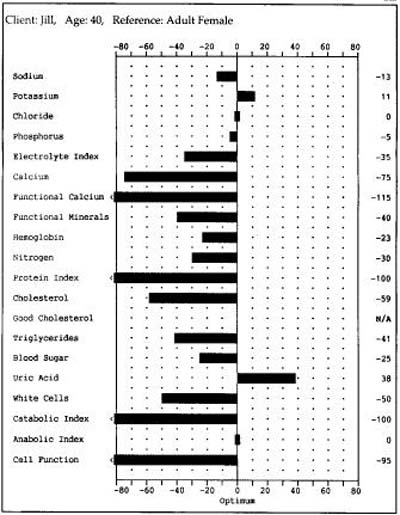
Here are the Score Plots of two Health Equations clients. The most significant difference is Jack's high Anabolic Index versus Jill's low Catabolic Index.
 |
A high Anabolic Index means there are excess anabolic lipids (fats) in the tissues. A low Catabolic Index means there are excess catabolic lipids in the tissues. Excesses of either anabolic or catabolic lipids impair oxygen and calcium utilization and cause electrolyte imbalances. The consequent severe impact on cell function results in symptoms and disease.
The entire body metabolism --and all life for that matter-- is an interplay between catabolic and anabolic processes. This interplay governs everything from daily hormone cycles to fetal development, birth, growth, aging and death. Whenever the rhythm of this interplay is interrupted, i.e., whenever there are excesses of catabolic or anabolic lipids in tissues, the result is symptoms and disease.Cholesterol and triglycerides are two anabolic lipids measured in the blood chemistry screen. Jack has excesses of both ? cholesterol score 76, triglyceride score 204. Jill has deficiencies of both ? cholesterol score -59, triglyceride score -41. Jack has excess anabolic processes. Jill is lacking in cholesterol and triglycerides and therefore has excess catabolic processes.
Jill will benefit from cholesterol rich foods --eggs, butter, cream. These same foods are also rich in saturated fats. The saturated fats (not the cholesterol) will increase her own production of cholesterol. Jack, on the other hand, will not benefit from these foods. A decrease in his sugar and carbohydrate consumption, plus elimination of alcohol and caffeine, will decrease his high cholesterol and triglycerides.This table indicates other measures Jack and Jill can take to restore the balance between their anabolic and catabolic processes.
|
overweight (high body fat), lethargy, low energy |
JILL
underweight (low body fat), hyperactive, "stressed out" |
|
| Diet: | less
carbohydrates, alcohol, caffeine;
more olive oil (monounsaturated fat) and salmon (EPA) |
more protein, eggs, cream, butter, meat |
| Activity: | aerobic exercise | rest, yoga, tai chi |
| Risk: | high blood pressure, heart disease, stroke, heartburn and cancer | inflammation (allergies, musculoskeletal, autoimmune), depression, female hormone deficiencies |